
Yes, The Sky is Complicated (But The Opportunity Isn’t)
By Claude Draillard
Founder & CEO of AvionGarde LLC
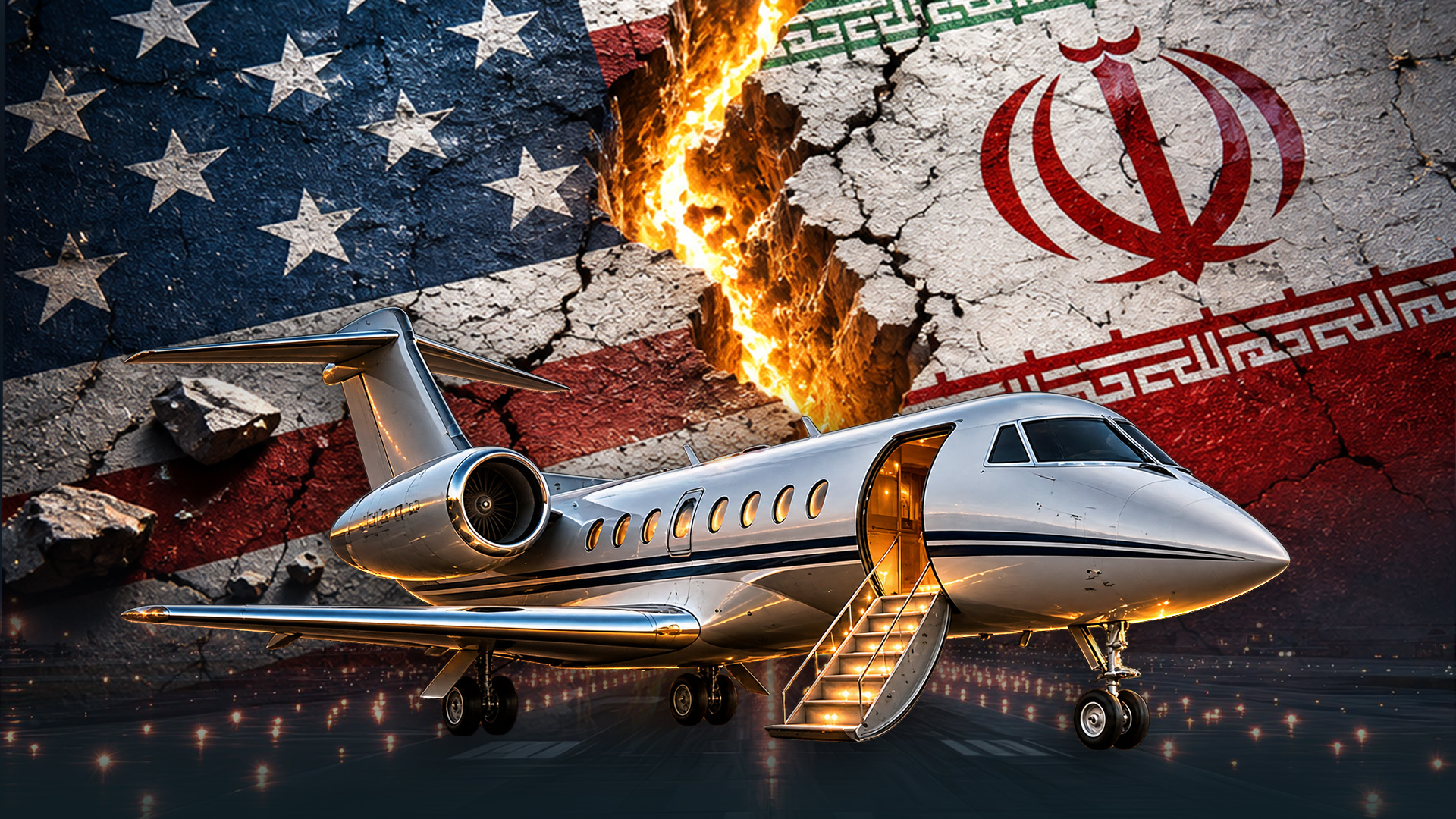
We’re hearing that sentence over and over again: “it’s complicated”. While we may wish we were in an episode of “Friends”, pieces of evidence are accumulating to show we’re actually in a bad relationship. And that relationship is not between any of us and our significant other. It’s between war zones and business aviation.
Who in their right mind would want to fly in the Middle East — an area that, according to the media and your favorite social media, has its skies taken over by, take your pick, fighter jets, stealth bombers, drones of all sizes, combat helicopters or any combination of those?
Yes, but…the show must go on: business still needs to be conducted and, on top of that, families have to be sent out of harm’s way (earlier this year, for example, French influencers in Dubai begged the French government to send them an aircraft to take them back to the “Mère Patrie,” even if it meant paying French taxes).
Yes, but airlines, one after the other, are reducing service to the region. For example, in the spring, Qatar Airways grounded its A380s as the routes they were operated on were suspended.
Let’s summarize the situation: it’s dangerous to fly, commercial service has at times been drastically reduced if not cancelled throughout the region, but the need to fly is still there, sometimes even more urgent than before the conflict.
Does that remind you of something? Remember, some six years ago: flights cancelled, airlines wondering if they’ll ever fly again, passengers stranded thousands of miles away from their homes and families.
Yes, the COVID pandemic.
What did we see back then for business aviation? First, a moment of panic with a collapse in flight hours, a slowdown of business aircraft transactions. Then reality took over and the need to travel, for those who could afford it, got so strong that it translated into an uncanny rush for anything that flies.
Kudos to the jet brokers and aviation lawyers that put a semblance of discipline in this chaos and allowed for transactions to happen with, surprisingly, at least to me, very little significant mismatch between buyer, mission, price, and aircraft.
Yes, but what have we seen recently? March 2026 YoY flight hours have declined in the conflict zones but increased everywhere else. Europe, which has been sluggish in terms of activity since the beginning of the year, had a good month of March with flight hours up 4.5% from a year ago and Africa is also on the rise (up some 6%). It may be that some of those flights are chartered for government officials or appointees directly related to the conflict. But when you see France leading the pack in Europe, despite its taxes and regulation on “private” flights, it cannot be only that.
Another data point shows that this movement is accelerating: growth in Flight hours was predicted to increase 3.5%-4% in March and Europe by 2.5%-3.0%, based on January and February activity. “Que nenni” as the French say (loosely, an old expression close to our modern “Hell no!”): the reality was much stronger growth in both regions.
What’s it all about?
Yes, but what does that mean? New business jet deliveries are still constrained: all OEMs have commitments to deliver for the next two to three years with limited YoY production growth. This means the pre-owned market has a good chance of keeping climbing.
This pre-owned market is in good shape: after the COVID rush, prices decreased slightly from peak but stabilized at a higher level than pre-COVID, inventory has not replenished as volume of retired aircraft remains low. Indeed, inventory is about 2% of the fleet for Bombardier and Gulfstream, between 3% and 4% for other OEMs vs. an industry standard of 7% over the last 30 years.
It is neither a buyer’s market nor a seller’s market. It is a market where a buyer with a well-defined set of missions will find the right aircraft, with the right pedigree, from the right seller. Opportunities to find the right aircraft for your mission are plenty! One difficulty though: Half the fleet is over 25 years old, and it’s been steadily increasing for years!
Yes but … that means the prices are right and the options to upgrade the aircraft are available whether it’s satellite communication systems (Starlink upgrades are becoming available on a lot of aircraft types!), full or partial refurbishment, new paint, engine or landing gear swaps — there are ways to make sure this new-to-you machine will be your faithful mode of transportation.
In the two current major conflict zones (Ukraine, Middle East), buyers are mostly cash buyers. But it is no longer only oligarchs and royal families that are buying aircraft. Businesses, whether in finance, infrastructure or trading, have discovered they are in dire need of that level of transportation. It is no longer a question of connections and credibility. It has become a question of efficiency, urgency and sometimes, mere survival.
Yes but — the regional infrastructures were in their infancy in Ukraine before 2022, the Middle East was usually seen as a reliable but with low volume market and too many ties to either the US or Europe or both. These days are over. The reshuffling of the geopolitical card deck impacts business aviation as well and all the conditions are in place for a business aviation boom in those two regions. It is time. But, yes.
Who in their right mind would want to fly in the Middle East — an area that, according to the media and your favorite social media, has its skies taken over by, take your pick, fighter jets, stealth bombers, drones of all sizes, combat helicopters or any combination of those?
Yes, but…the show must go on: business still needs to be conducted and, on top of that, families have to be sent out of harm’s way (earlier this year, for example, French influencers in Dubai begged the French government to send them an aircraft to take them back to the “Mère Patrie,” even if it meant paying French taxes).
Yes, but airlines, one after the other, are reducing service to the region. For example, in the spring, Qatar Airways grounded its A380s as the routes they were operated on were suspended.
Let’s summarize the situation: it’s dangerous to fly, commercial service has at times been drastically reduced if not cancelled throughout the region, but the need to fly is still there, sometimes even more urgent than before the conflict.
Does that remind you of something? Remember, some six years ago: flights cancelled, airlines wondering if they’ll ever fly again, passengers stranded thousands of miles away from their homes and families.
Yes, the COVID pandemic.
What did we see back then for business aviation? First, a moment of panic with a collapse in flight hours, a slowdown of business aircraft transactions. Then reality took over and the need to travel, for those who could afford it, got so strong that it translated into an uncanny rush for anything that flies.
Kudos to the jet brokers and aviation lawyers that put a semblance of discipline in this chaos and allowed for transactions to happen with, surprisingly, at least to me, very little significant mismatch between buyer, mission, price, and aircraft.
Yes, but what have we seen recently? March 2026 YoY flight hours have declined in the conflict zones but increased everywhere else. Europe, which has been sluggish in terms of activity since the beginning of the year, had a good month of March with flight hours up 4.5% from a year ago and Africa is also on the rise (up some 6%). It may be that some of those flights are chartered for government officials or appointees directly related to the conflict. But when you see France leading the pack in Europe, despite its taxes and regulation on “private” flights, it cannot be only that.
Another data point shows that this movement is accelerating: growth in Flight hours was predicted to increase 3.5%-4% in March and Europe by 2.5%-3.0%, based on January and February activity. “Que nenni” as the French say (loosely, an old expression close to our modern “Hell no!”): the reality was much stronger growth in both regions.
What’s it all about?
Yes, but what does that mean? New business jet deliveries are still constrained: all OEMs have commitments to deliver for the next two to three years with limited YoY production growth. This means the pre-owned market has a good chance of keeping climbing.
This pre-owned market is in good shape: after the COVID rush, prices decreased slightly from peak but stabilized at a higher level than pre-COVID, inventory has not replenished as volume of retired aircraft remains low. Indeed, inventory is about 2% of the fleet for Bombardier and Gulfstream, between 3% and 4% for other OEMs vs. an industry standard of 7% over the last 30 years.
It is neither a buyer’s market nor a seller’s market. It is a market where a buyer with a well-defined set of missions will find the right aircraft, with the right pedigree, from the right seller. Opportunities to find the right aircraft for your mission are plenty! One difficulty though: Half the fleet is over 25 years old, and it’s been steadily increasing for years!
Yes but … that means the prices are right and the options to upgrade the aircraft are available whether it’s satellite communication systems (Starlink upgrades are becoming available on a lot of aircraft types!), full or partial refurbishment, new paint, engine or landing gear swaps — there are ways to make sure this new-to-you machine will be your faithful mode of transportation.
In the two current major conflict zones (Ukraine, Middle East), buyers are mostly cash buyers. But it is no longer only oligarchs and royal families that are buying aircraft. Businesses, whether in finance, infrastructure or trading, have discovered they are in dire need of that level of transportation. It is no longer a question of connections and credibility. It has become a question of efficiency, urgency and sometimes, mere survival.
Yes but — the regional infrastructures were in their infancy in Ukraine before 2022, the Middle East was usually seen as a reliable but with low volume market and too many ties to either the US or Europe or both. These days are over. The reshuffling of the geopolitical card deck impacts business aviation as well and all the conditions are in place for a business aviation boom in those two regions. It is time. But, yes.
0 Comments